Begin with the meals that cause the most friction
Choose one difficult point in the day. It might be a rushed morning, a lunch break without nearby food options or the evening after a long commute. Solve that situation first rather than writing a complete menu for a week you cannot predict.
If breakfast is the problem, keep an option that needs little preparation. If lunch is frequently forgotten, decide where it will come from before leaving home. If evening cooking feels demanding, identify a simple meal using ingredients you already know. The first improvement is often reducing uncertainty at the moment when you have the least time to think.
Use food groups as a flexible guide
The NHS Eatwell Guide looks at the overall balance of what you eat. You do not need to arrange every meal into identical proportions. Across the day and week, make room for vegetables and fruit, starchy foods, protein foods, and dairy or suitable alternatives that fit your needs.
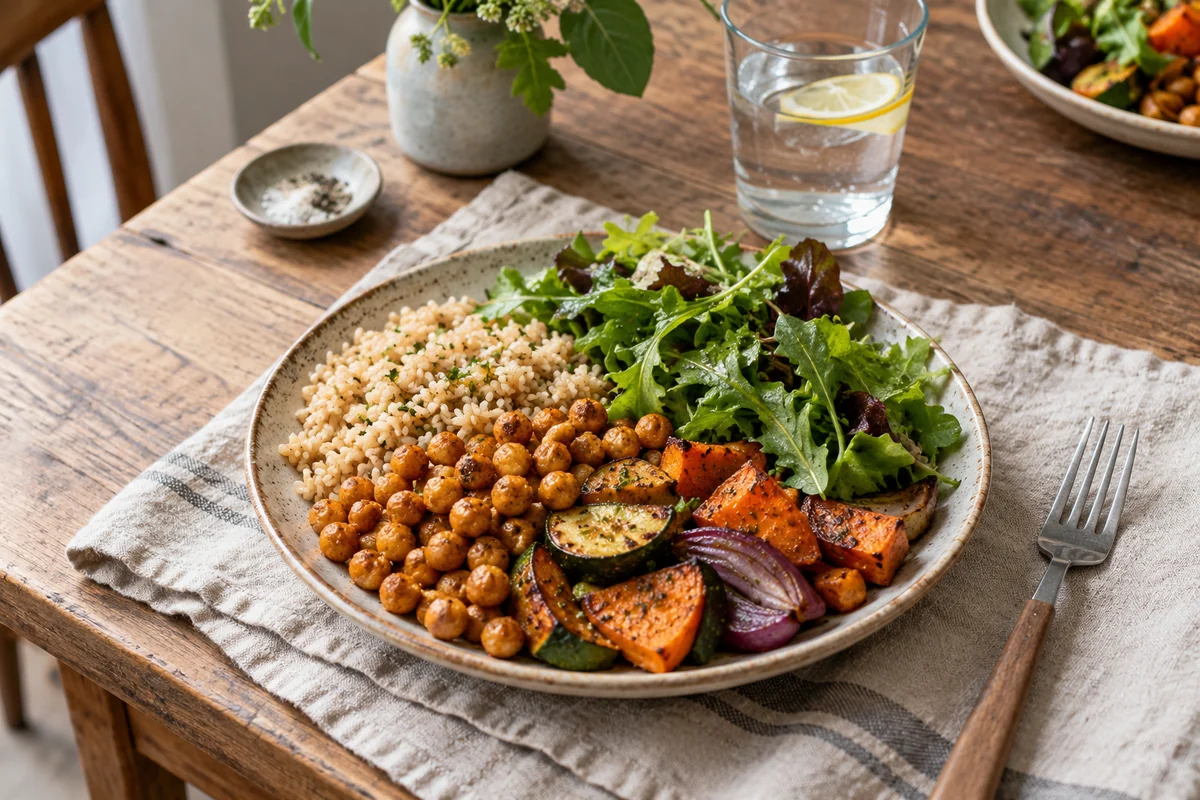
Translate that broad idea into familiar dishes. Beans on wholemeal toast with vegetables, a rice bowl with lentils, or a sandwich with a protein filling and fruit can all be practical starting points. Higher-fibre staples and a range of ingredients add variety without requiring a different recipe every evening. Keep personal dietary requirements in mind when choosing alternatives.
Build a cupboard that earns its space
Choose a small set of staples you enjoy and know how to use. Oats, pasta, rice, tinned tomatoes, beans and lentils offer several possible combinations. Frozen vegetables can be useful when plans change, while fresh ingredients can be bought in amounts your household is likely to finish.
Before shopping, check what you already have and which items need using. A list organised around actual meals is easier to work with than a collection of ingredients bought because they seem virtuous. Leave space for preferences and budget. A useful food routine should be affordable enough and enjoyable enough to repeat.
Plan lunch as part of the working day
A lunch plan can be as simple as naming the source: a packed meal, suitable leftovers or a nearby option you can reach during your break. Put the decision in the same practical category as taking your keys or checking a meeting location.
Think about facilities. Will there be a fridge, somewhere to reheat food or enough time to sit down? Follow storage and reheating instructions, and use a suitable container for the journey. If your work moves between locations, choose options that suit those conditions rather than relying on a kitchen you may not have. Practical access matters as much as recipe inspiration.
Keep drinks within the routine
Have water available and drink regularly through the day. A refill when you make breakfast or take a lunch break can be a straightforward reminder. You do not need a complicated app to notice that the bottle you brought is still untouched at the end of a busy afternoon.
Consider how drinks fit your evening too. If you rely on caffeinated drinks late in the day, review whether that pattern sits comfortably with your sleep routine. Make changes gradually and observe your own circumstances. Food and drink are part of a wider day that also includes rest, activity, workload and social time.
Prepare for the evening that changes
Keep one dependable meal for the day when your plan falls apart. That may be a quick cupboard combination or a suitable prepared option with something simple alongside it. Having a fallback reduces the need to invent a new answer when you arrive home late.
Once a week, take a brief look at what worked. Which lunch was easy to pack? Which vegetables were used? Which ambitious recipe never happened? Adjust the next shop accordingly. The aim is a food routine that supports ordinary life, with enough variety to remain enjoyable and enough flexibility to survive a busy week.